
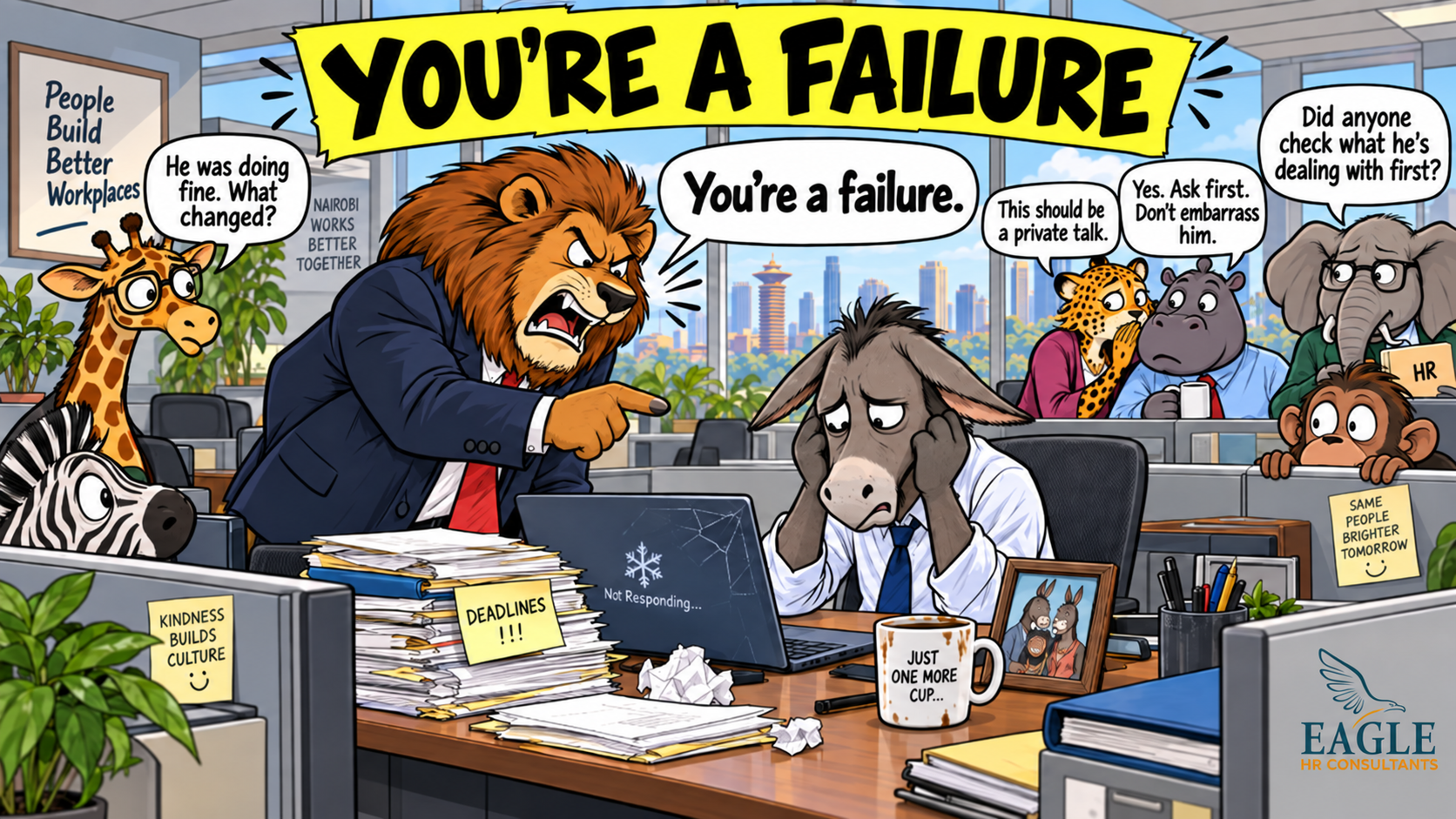
A manager notices that a reliable employee has become slower, withdrawn or less consistent, and managers often move directly into performance management. Targets are repeated, deadlines are tightened and the file begins to grow before anyone asks what changed in the employee's work or circumstances.
That can produce the wrong response; performance still matters, but a change may sit behind workload, role confusion, conflict, inadequate tools, family pressure, illness, grief or a capability gap. A manager should not diagnose the cause from behaviour alone, and disclosure should never be the price of dignity.
The issue is current in Kenya: at last week's Kenya Psychiatric Association conference, Mathari National Teaching and Referral Hospital presented a staff wellness assessment in which 47.1 percent of 155 respondents reported work-related stress, 50.3 percent described workloads as unmanageable and only 20 percent believed counselling services were confidential. The survey covered one institution, not Kenya as a whole, but the trust question matters.
WHO recommends manager training that helps supervisors recognise distress, communicate openly and understand how job stressors affect mental health, while also calling for action on working conditions. Kenya's National Guidelines on Workplace Mental Wellness also place support, access to care and responsible management inside the employer conversation.
The first manager conversation should protect privacy and keep judgement open; describe the change observed, explain its work impact and ask what has changed or what support may be needed. Listen before deciding whether the matter belongs in performance management, workload review, HR support or qualified clinical care.
Managers also need limits because they are not therapists, should not make diagnoses and should not promise absolute secrecy where an immediate safety concern requires escalation. Health information is sensitive personal data under Kenya's Data Protection Act, so disclosures should be handled carefully, shared only where there is a lawful need and protected from casual circulation.
A practical sequence is CARE: Choose privacy, Ask what has changed, Respond without diagnosing and Escalate urgent safety concerns through the organisation's safeguarding route while connecting qualified support. Where appropriate, the manager should agree on work actions, clear priorities and a follow-up date so support does not become ambiguous and performance management does not become punishment.
This is not softer management; it is more competent management because it allows the organisation to protect dignity while still dealing with work standards, deadlines and accountability.
At Eagle HR Consultants, we support organisations with manager development, employee relations, HR policy and workplace wellbeing practice; before the next warning letter begins, make sure the right conversation has happened first.