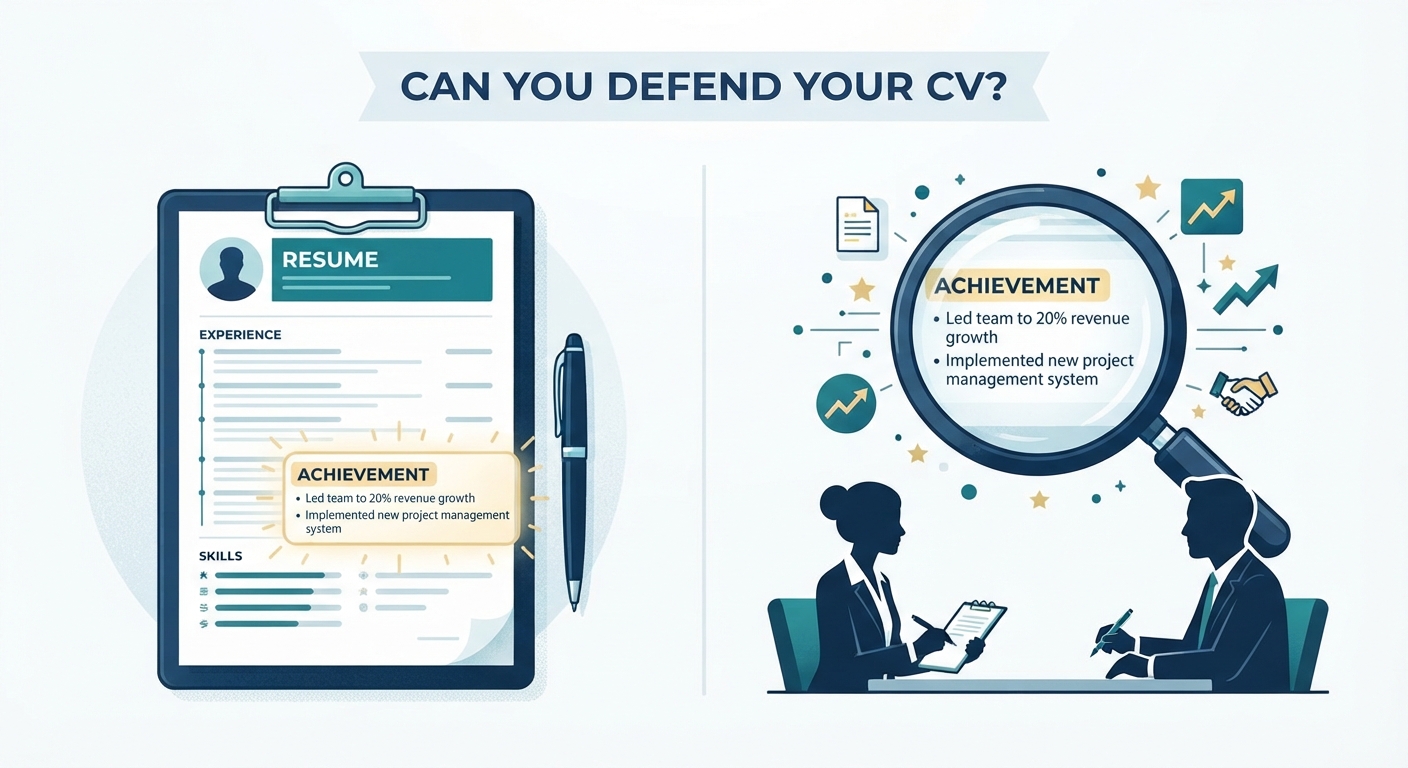
Your CV has impressed the recruiter, your qualifications meet the requirements and the organisation has invited you for an interview. Everything appears to be progressing well until a member of the panel points to an achievement on your CV and asks you to explain what you personally did.
Suddenly, a statement that looked impressive on paper requires an explanation that cannot be memorised from an interview guide.
Consider a candidate applying for an Operations Manager position whose CV states that they improved departmental efficiency and reduced reporting delays. The achievement may be genuine, but the panel still needs to understand whether the candidate identified the problem, introduced the changes, supervised implementation or contributed as part of a wider team. The distinction matters because an employer is not simply recruiting someone who worked in a successful department; it is assessing whether that individual possesses the capabilities required for the vacant position.
This is where proper interview preparation should begin. Instead of spending the entire evening rehearsing familiar questions, examine the responsibilities in the job advertisement and identify experiences that demonstrate your suitability. For each achievement, consider the circumstances, your individual responsibility, the decisions you made and the outcome of your contribution.
Where figures are available and can be disclosed appropriately, use them accurately. Where they are unavailable, explain the result without inventing statistics or claiming responsibility for work undertaken by colleagues. A credible account of an imperfect assignment can be more informative than an impressive achievement that the candidate cannot explain.
For graduates entering Kenya's employment market, useful examples may come from industrial attachments, academic projects, voluntary assignments or practical training. An experienced professional may draw on operational responsibilities, employee supervision or difficult management decisions, while a candidate seeking an executive appointment should be prepared to discuss leadership judgement, accountability and the consequences of decisions made under pressure.
Preparation must also extend beyond personal achievements. Research the employer, understand the position, confirm the interview arrangements and prepare questions about the work, reporting relationships and performance expectations. An interview should enable candidates to assess the opportunity while giving employers sufficient evidence to evaluate their suitability.
After the discussion, record the questions you found difficult, consider how effectively you explained your experience and note the expected recruitment timeline. Any follow-up should remain professional and respect the process communicated by the employer.
Recruitment panels have an equally important responsibility. Confidence and presentation should not replace evidence, and candidates should be assessed against the requirements of the position through relevant questions, consistent evaluation criteria and properly documented decisions.
At Eagle HR Consultants, our Recruitment and Executive Search services support organisations in identifying candidates whose qualifications, experience and demonstrated capabilities correspond with their workforce needs.
For candidates preparing for their next opportunity, our free Interview Checklist provides practical guidance on preparation, panel interviews and professional follow-up.
Before attending another interview, examine the strongest achievement on your CV and consider whether you could explain your actual contribution without relying on a rehearsed statement.