There was a time when an excellent CV told an employer something meaningful about the person behind it. The candidate had selected what mattered, organised their experience, found the language to explain it and made a case for why they deserved attention. The document was imperfect, but it carried traces of judgement, effort and self-awareness. That signal is weakening.
Today, a candidate can place a job description beside an ordinary CV and, within minutes, improve the language, mirror the employer’s terminology, sharpen achievements and restructure the entire application around the vacancy. The CV becomes stronger and well, the candidate may not have changed at all. This is not an argument against artificial intelligence. Candidates are entitled to use good tools well. The problem belongs to employers if we continue treating a document that is increasingly easy to optimise as though it were reliable evidence of future performance. That is the real hiring question.
We may be screening presentation instead of capability
Kenyan employers know the contradiction: A vacancy attracts hundreds of applications, yet the hiring manager still concludes, “We cannot find the right person.”
Candidates experience the opposite frustration: They have qualifications, experience and applications in circulation, yet cannot understand why nobody is calling.
The difficulty is not always a shortage of people, but at times, it is the weakness of the instrument being used to recognise them. A CV can tell us where someone worked, what they studied and what responsibilities they say they carried. It is far less capable of telling us how that person will behave when the answer is unclear, the client is angry, the deadline is collapsing or the plan has failed. Those are the moments in which performance actually becomes visible. Psychologically, interviews and CV reviews are vulnerable to a familiar error: we are easily persuaded by fluency. People who speak confidently, write elegantly or resemble our mental picture of a strong candidate can appear more competent before they have demonstrated competence. Good hiring therefore requires employers to separate presentation from evidence.
Give the CV a smaller job
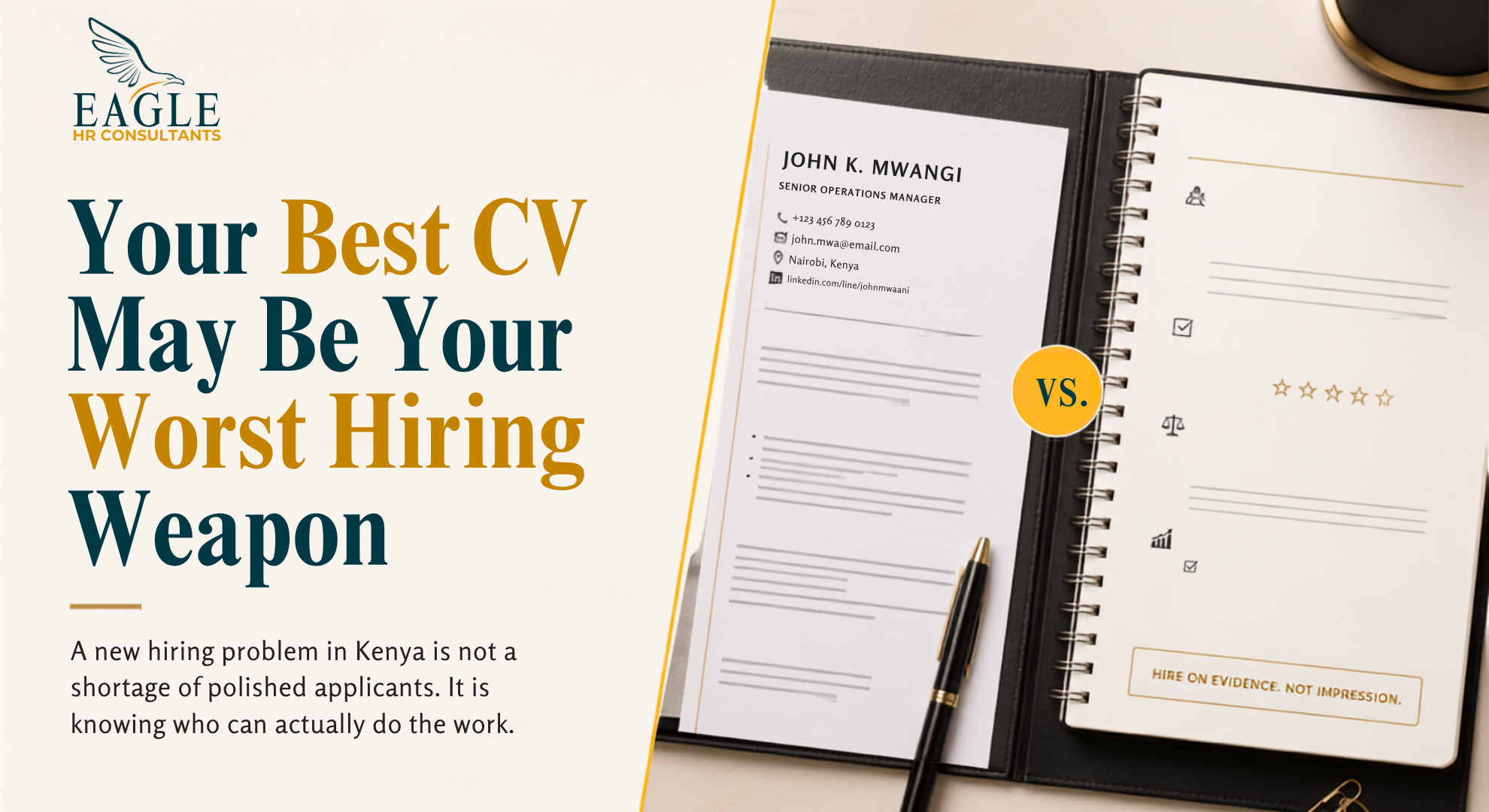
The answer is not to abandon the CV, but to use it for what it does well: history, context and career progression. Then move closer to the work.
If you are hiring a salesperson, present a difficult client objection.
If you are hiring a finance professional, give them figures with something wrong inside them.
If you are hiring a manager, present a real people problem involving conflicting priorities.
If you are hiring a writer, give them something poorly written and ask what they would change.
The exercise does not need to be elaborate. It should simply give the employer evidence that the candidate can think and perform beyond the language of the application. The same principle should reshape interviews. Instead of relying on questions candidates can rehearse, ask them to explain their reasoning.
Why did you choose that approach?
What information would you need before deciding?
What could go wrong?
What would make you change your mind?
Those questions reveal more than confidence. They begin to reveal judgement.
Better hiring is built from several signals
No single document, test or interview should carry the entire decision.
The CV provides history.
A practical assessment tests capability.
A structured interview examines judgement.
References verify important claims.
Probation tests whether performance can be sustained inside the real organisation.
Together, these signals produce something much more valuable than a polished application: evidence, while they also create a fairer hiring process. The strongest candidate should not lose simply because another applicant had a better template, stronger vocabulary or better access to optimisation tools. Recruitment should reward the person most capable of doing the work, not merely the person most capable of describing themselves.
The CV is not dead. Its monopoly is.
AI will continue to improve applications while recruitment technology will continue to improve screening. Neither development guarantees better hiring. The organisations that improve will be those that become better at distinguishing claims from capability and confidence from competence.
That is the shift HR leaders and executives should be preparing for, when presentation becomes easier to manufacture, evidence becomes more valuable. So, before making the next hire, ask a better question: not, “Who has the strongest CV?”
Ask: Who has given us the strongest evidence that they can do this job?
Eagle HR Consultants supports organisations in strengthening recruitment, selection and talent assessment systems so that hiring decisions are based on evidence, judgement and organisational fit rather than presentation alone. If your recruitment process still rewards the best-written application, it may be time to redesign what happens after the CV.